AskAI
AskAI is designed to make government services more accessible, efficient and transparent. Its main goal is to support the unified government services platform by integrating large language models (LLMs) to improve the efficiency, accessibility and responsiveness of public services.
Primary goals and objectives
- The efficiency of UAE Gov services is set to increase threefold year on year.
- Increase customer satisfaction feedback by 20% overall.
- Automate at least 30% of routine tasks for government employees who interact with clients.
Trade-offs
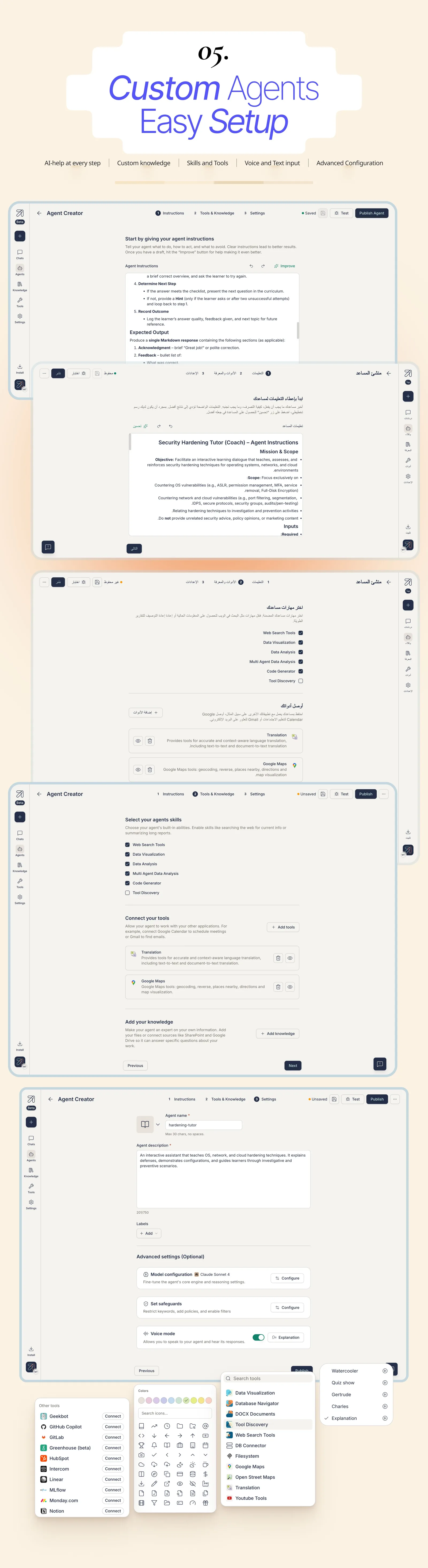
The scope for the first year was deliberately limited to two core user flows: ‘Flexible Copilot’ and ‘Customisable Assistant’. Many more were identified during the discovery phase, but were deprioritised to maintain focus on the initial release. The platform was designed to be extensible, with integrations to existing systems planned for later phases.
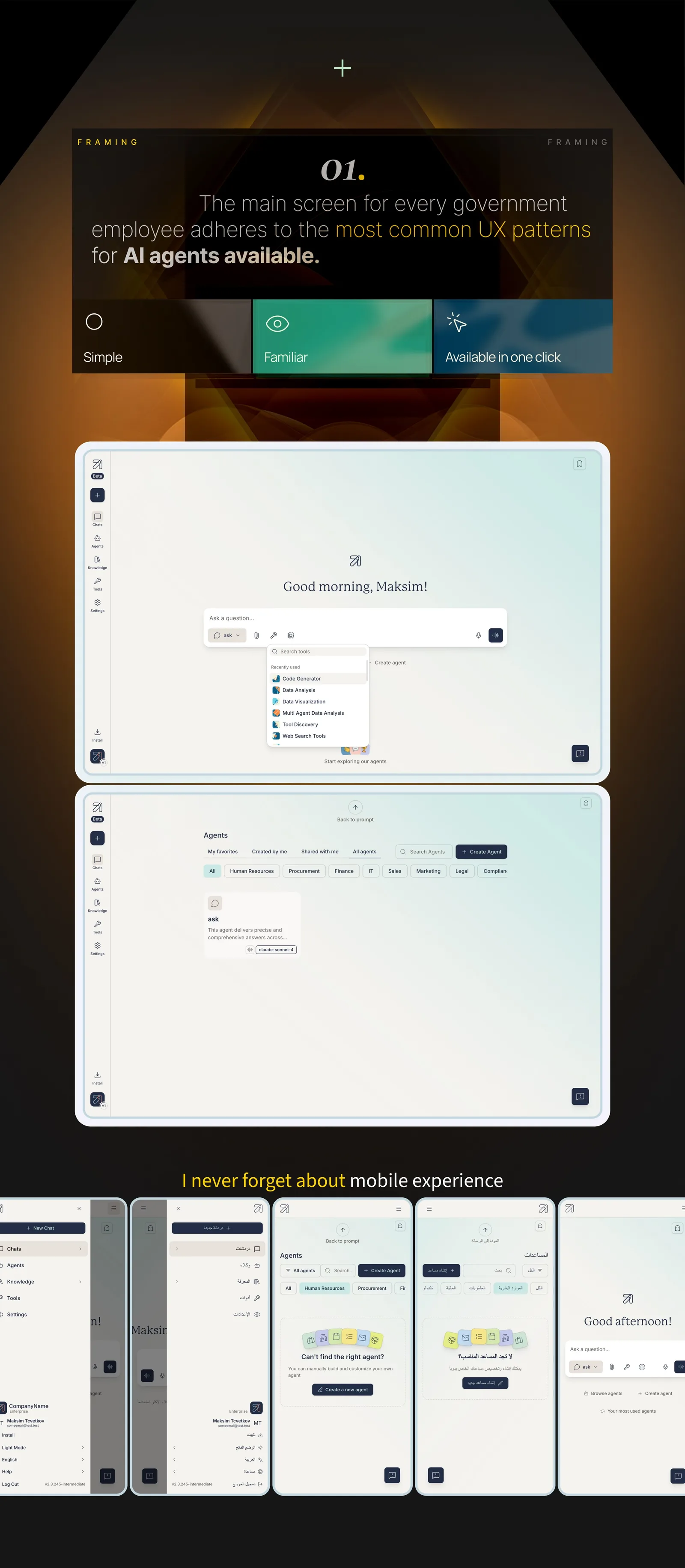
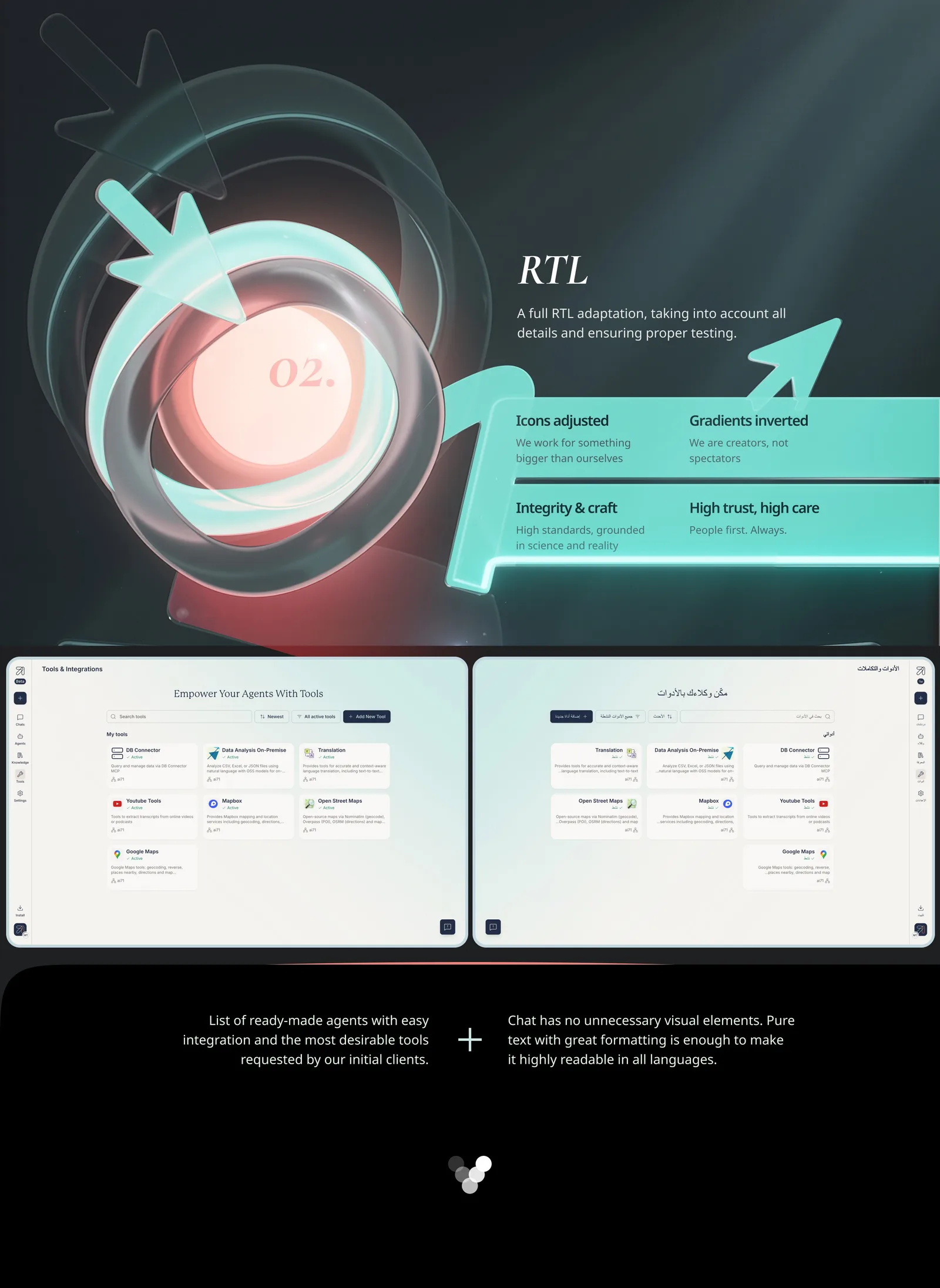
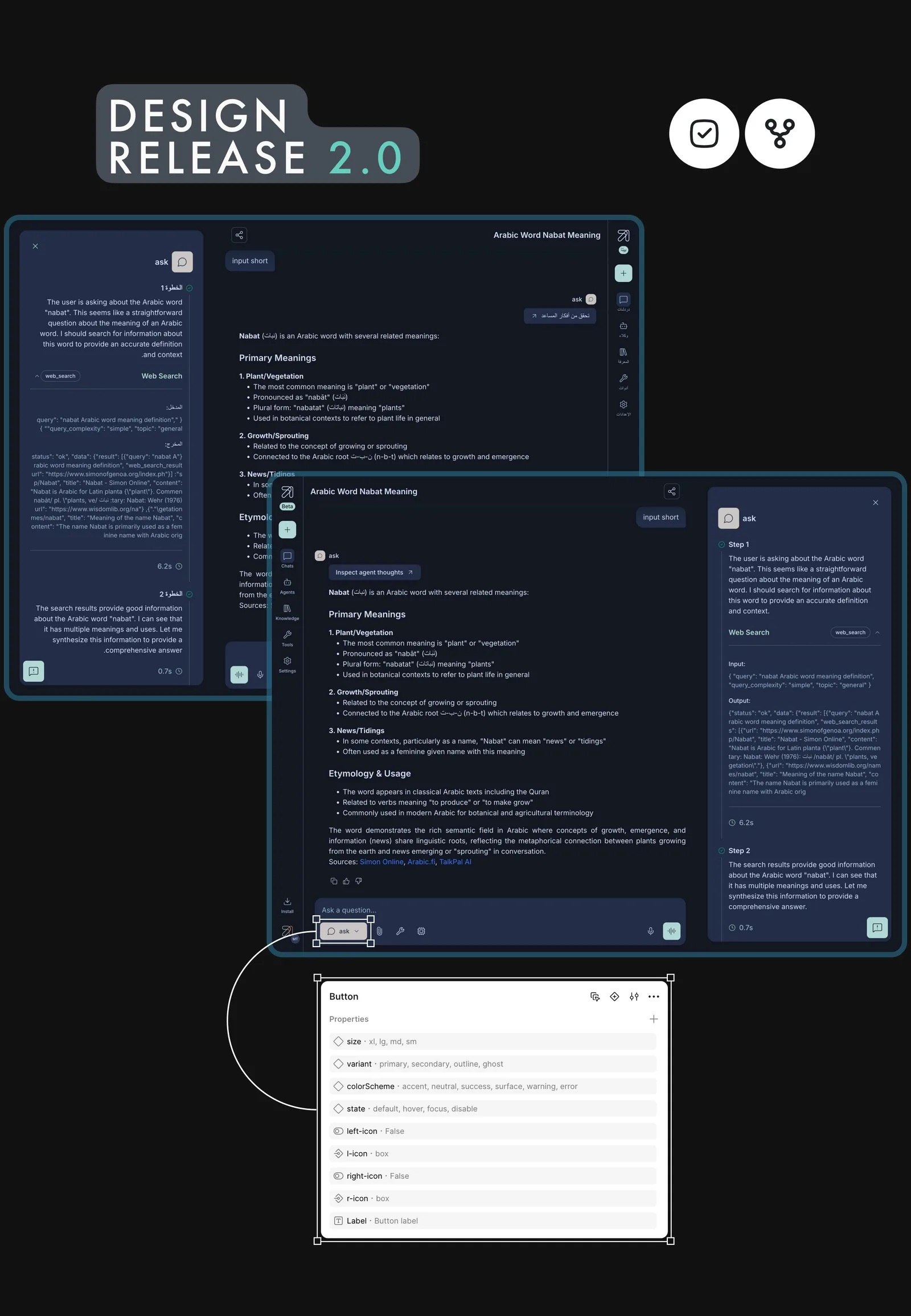
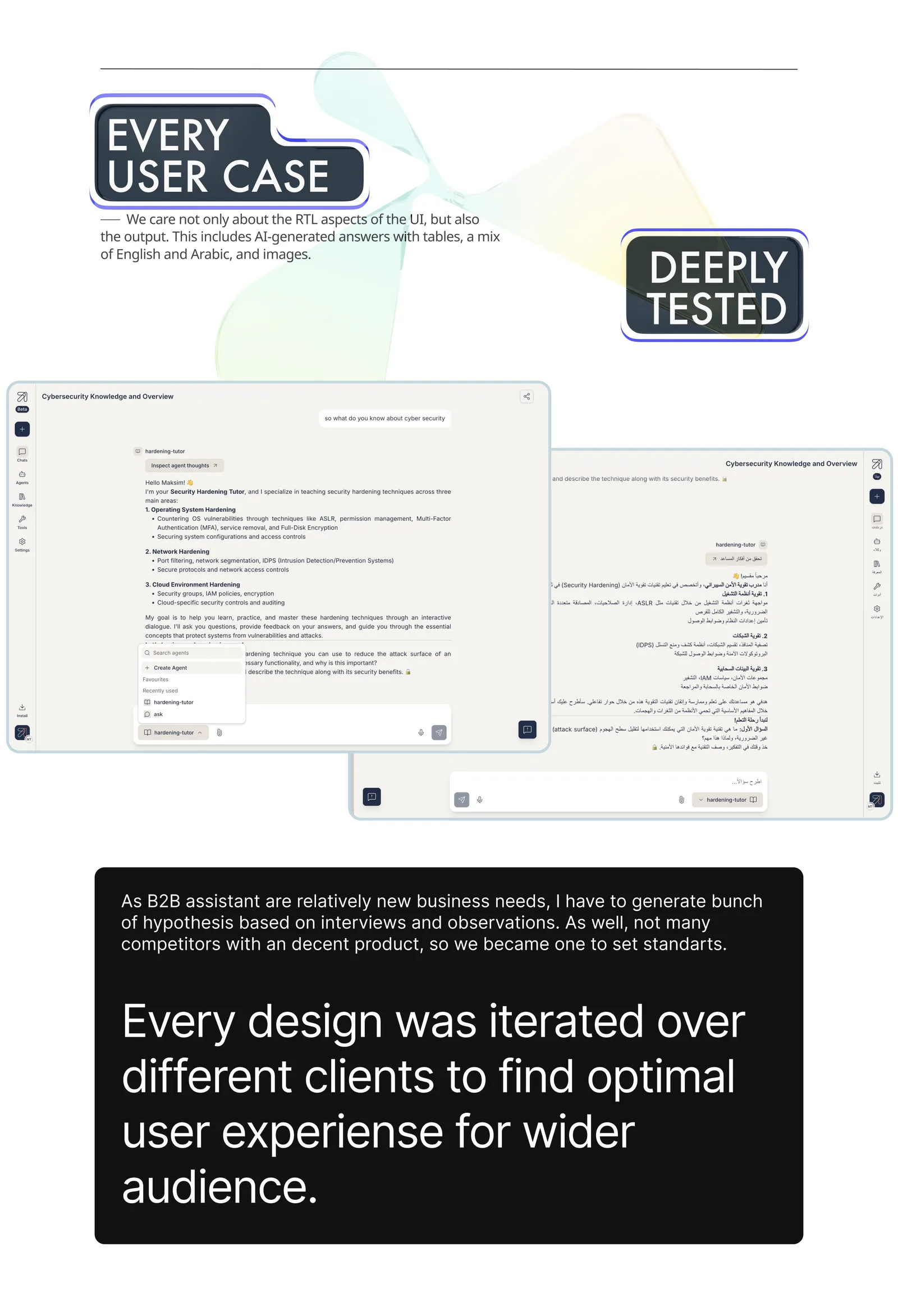
The interface is intuitive and appealing, and covers all user needs and expectations in terms of UX from the outset. Let’s start with RTL.

UX issues related to LLM
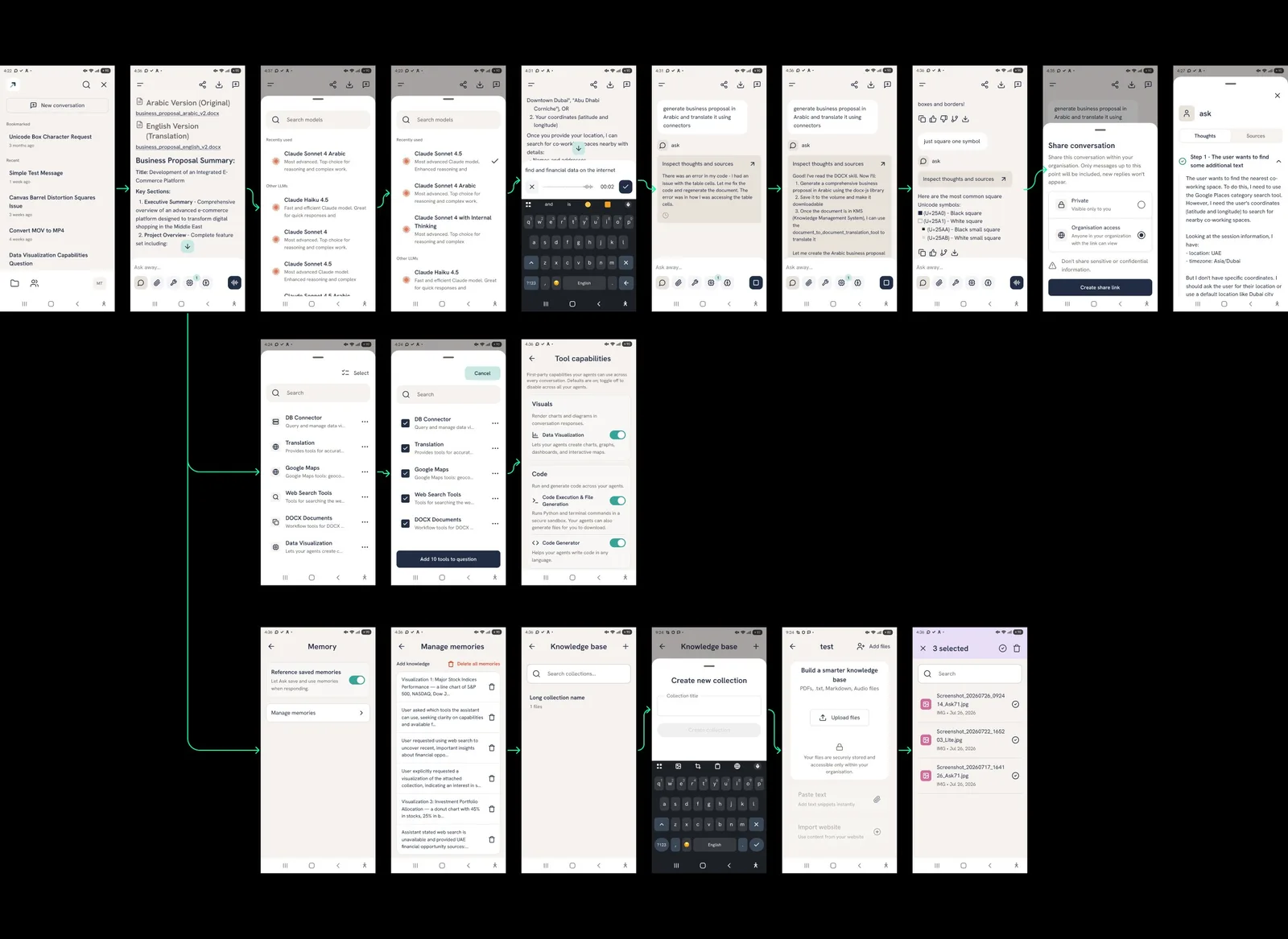
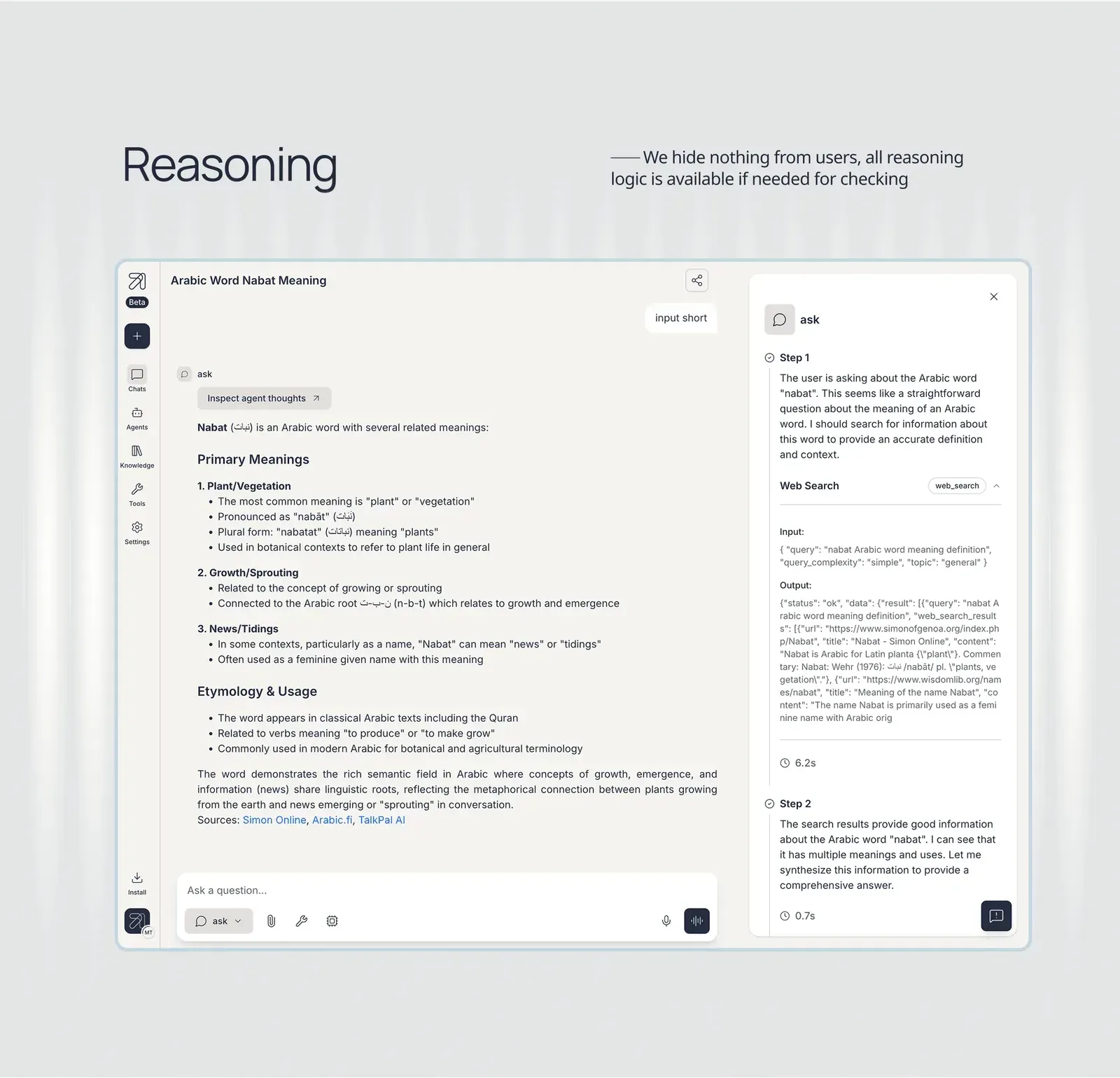
Fact-checking still has to be done by humans. It’s not just a detailed prompt; it’s a way of avoiding losing context between reasoning steps and thought patterns. This helps to keep the context window smaller and save computational power. So it should feel like single-model interaction while it’s multi-agent orchestration.
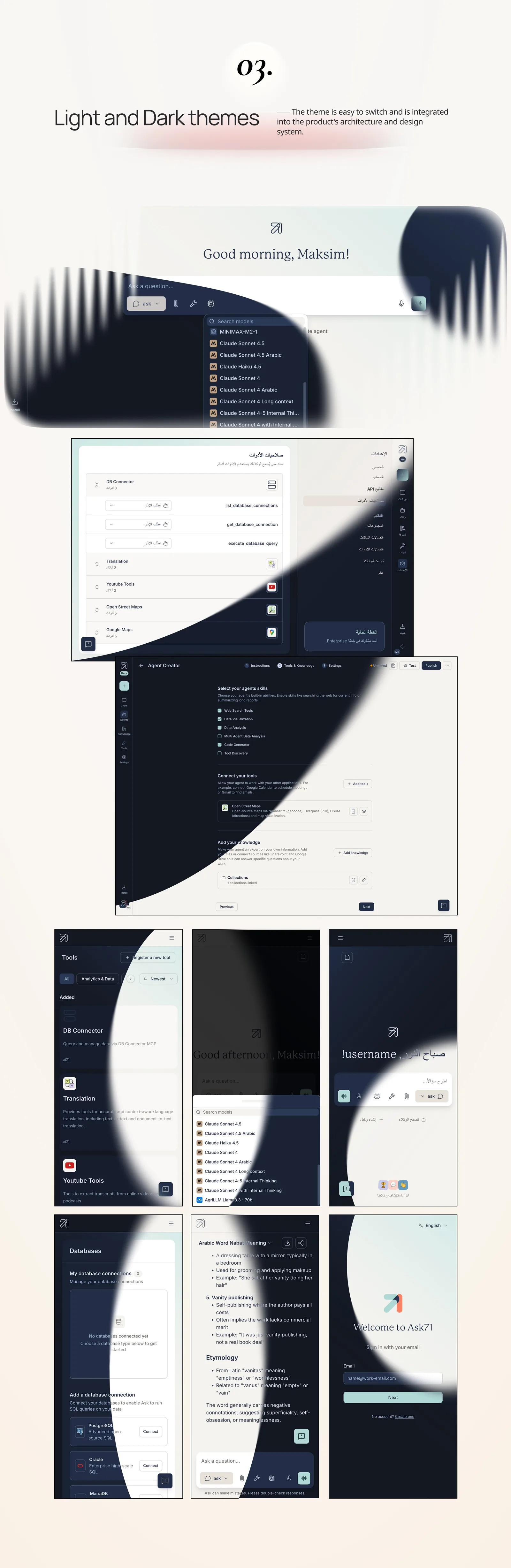
Connectors and model selection
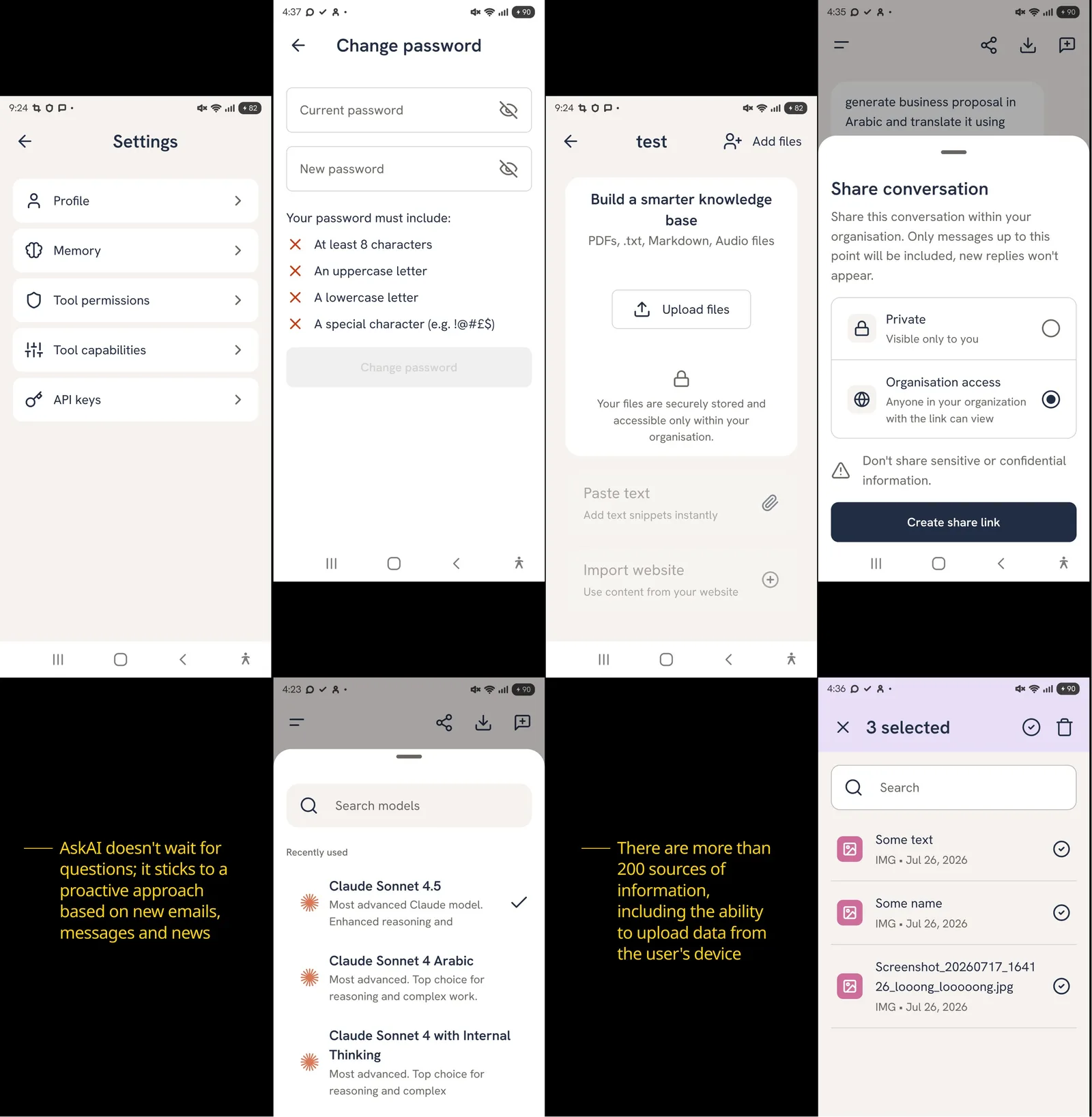
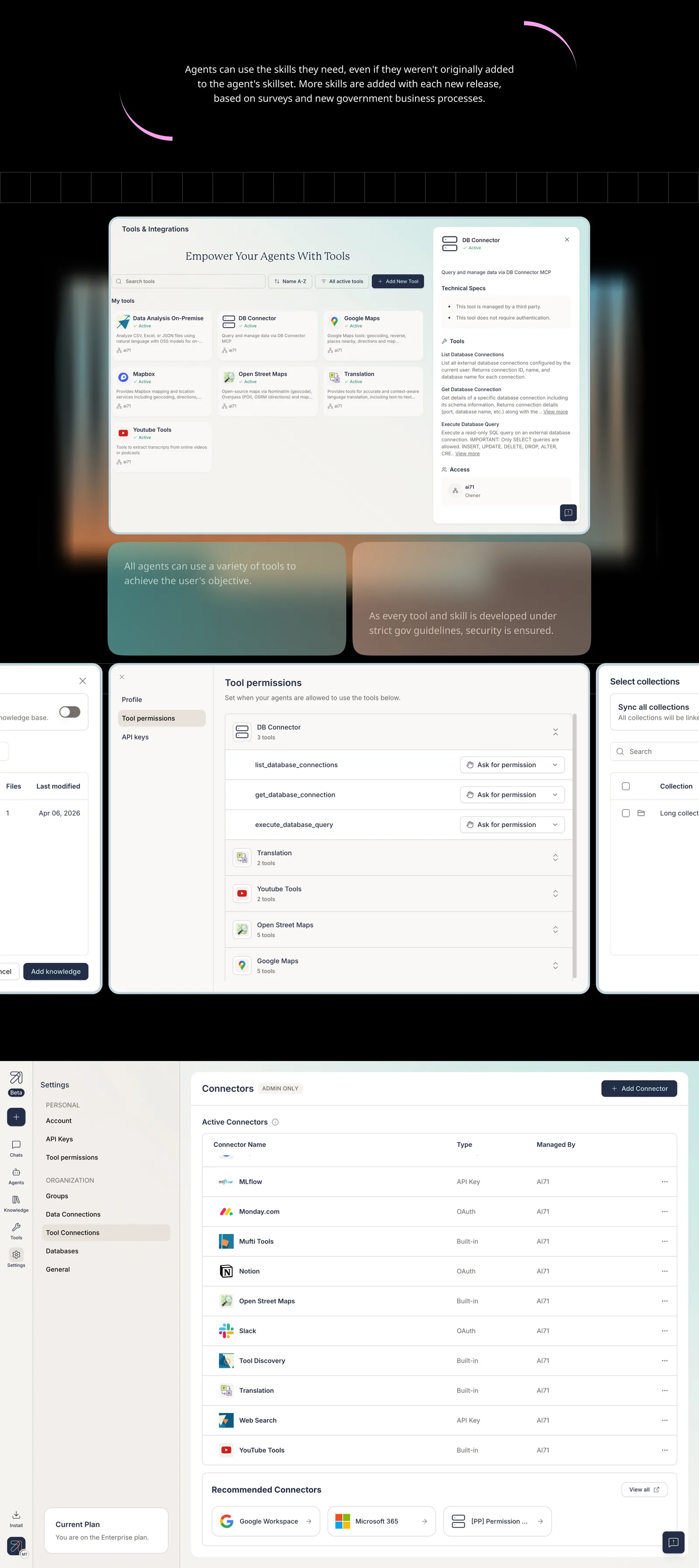
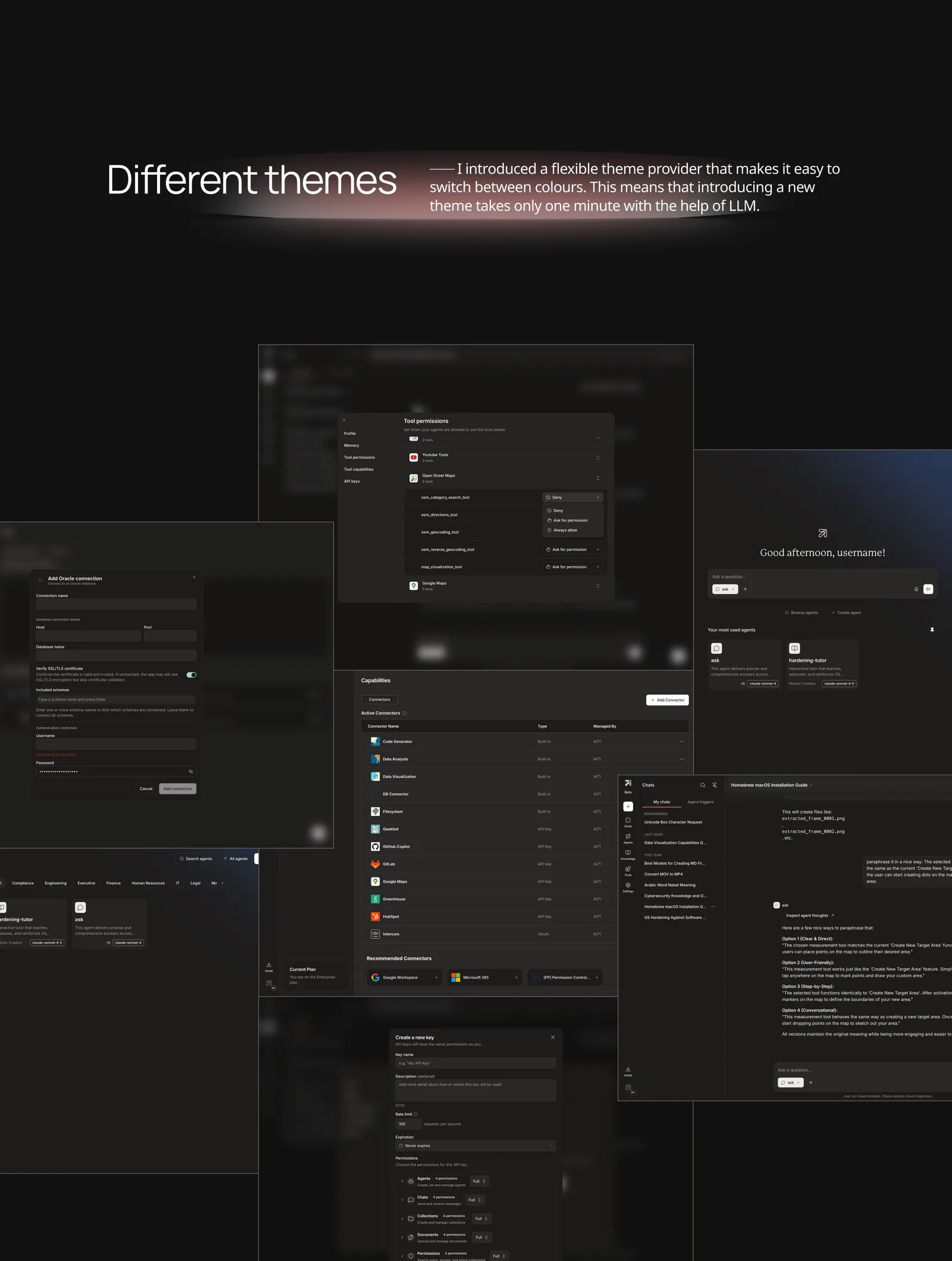
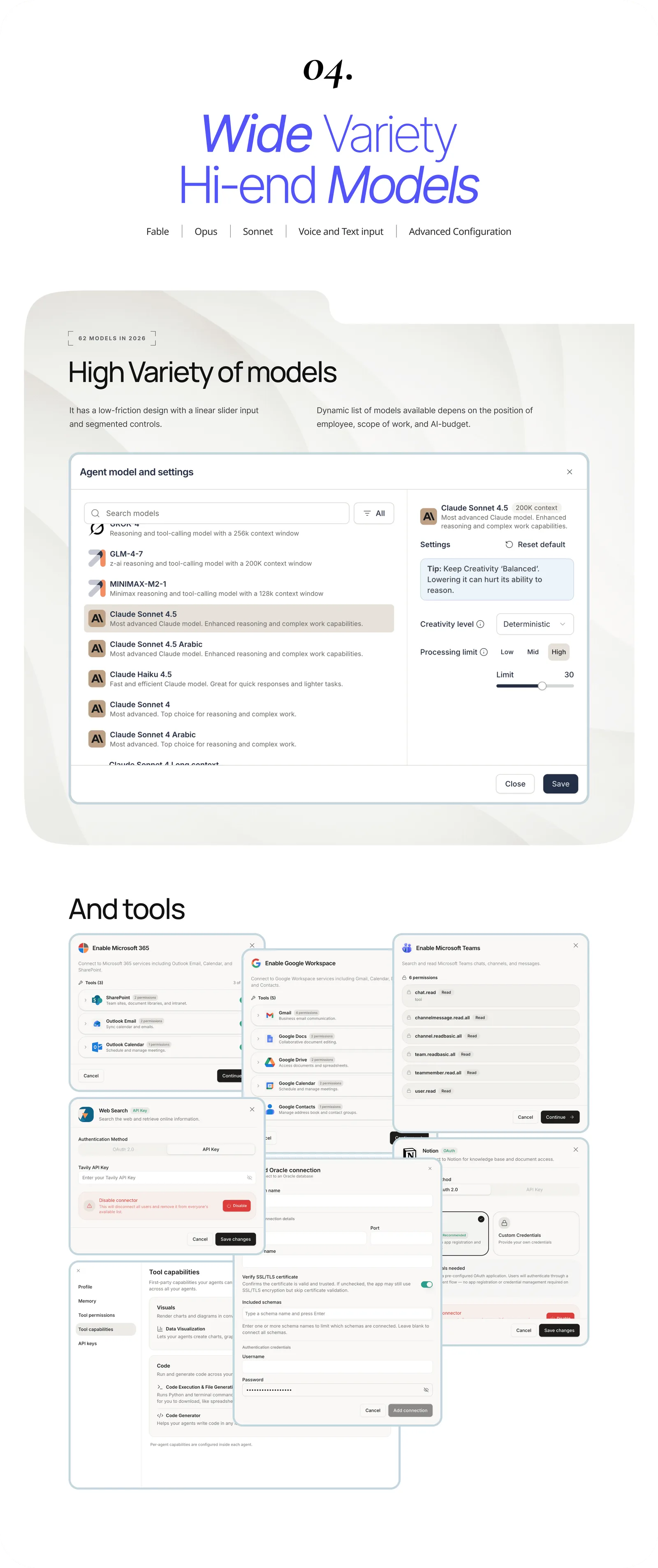
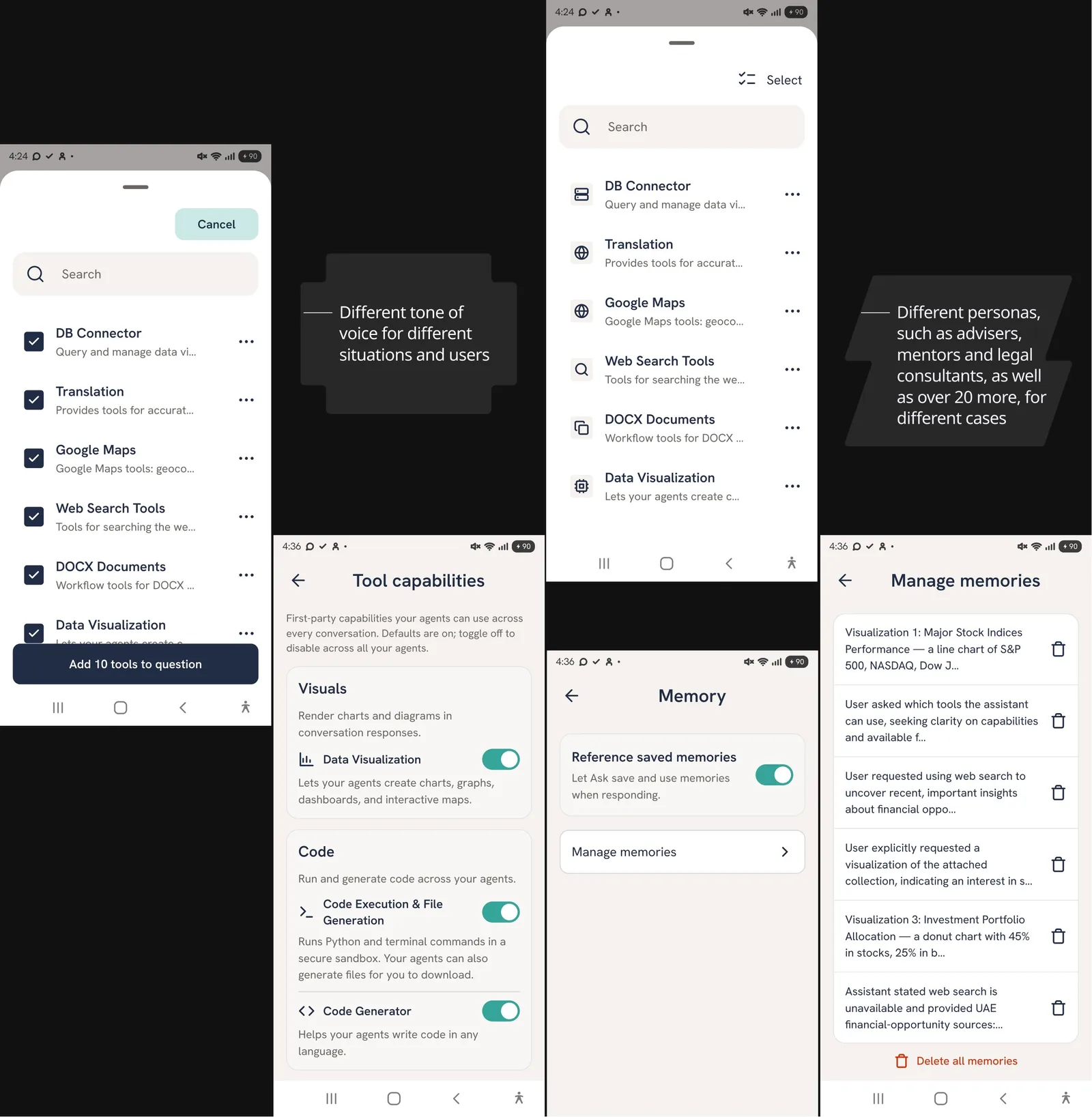
The LLM works natively with dozens of popular office tools, merging ecosystems into a single workflow. We automatically select models based on the selected connectors and tools based on the results/speed ratio.
Outcomes by mid-2026
- ✅ Eight government entities started using the product for the first time three months after development began.
- ✅ Reduced manual analysis and daily overhead for managers.
- ✅ 74% faster reaction to performance issues through alerts and automated tasks.
- ✅ Eliminated fragmentation by replacing multiple tools with a unified system.
- ✅ Managers can now understand the situation and act without relying on spreadsheets or manual coordination.
- ✅ Introduced clear and consistent action protocols across regions.
- Retention increased from 43% to 64% thanks to a simplified workflow, personalisation and improved visualisation.
- Revenue increased by 38% in 2026, at which point AI71 became profitable.
.md
I landed on five files, each with a single, clearly defined responsibility:
- The rulebook — behavioral rules, component priority order, and an audit checklist Claude executes before delivering any output.
- The primary component index — a catalog of our main component library. Claude consults this first, before looking anywhere else.
- The extended library guide — file references for our broader design system libraries, organized so Claude knows precisely where to search next.
- The layout pattern reference — links to real screens from our product, used for layout logic only. Never for component selection.
- The fallback spec — a last-resort reference containing our token values, typography scale, and spacing rules for when no library component exists.
Step back. Why?
Ensure the following automation:
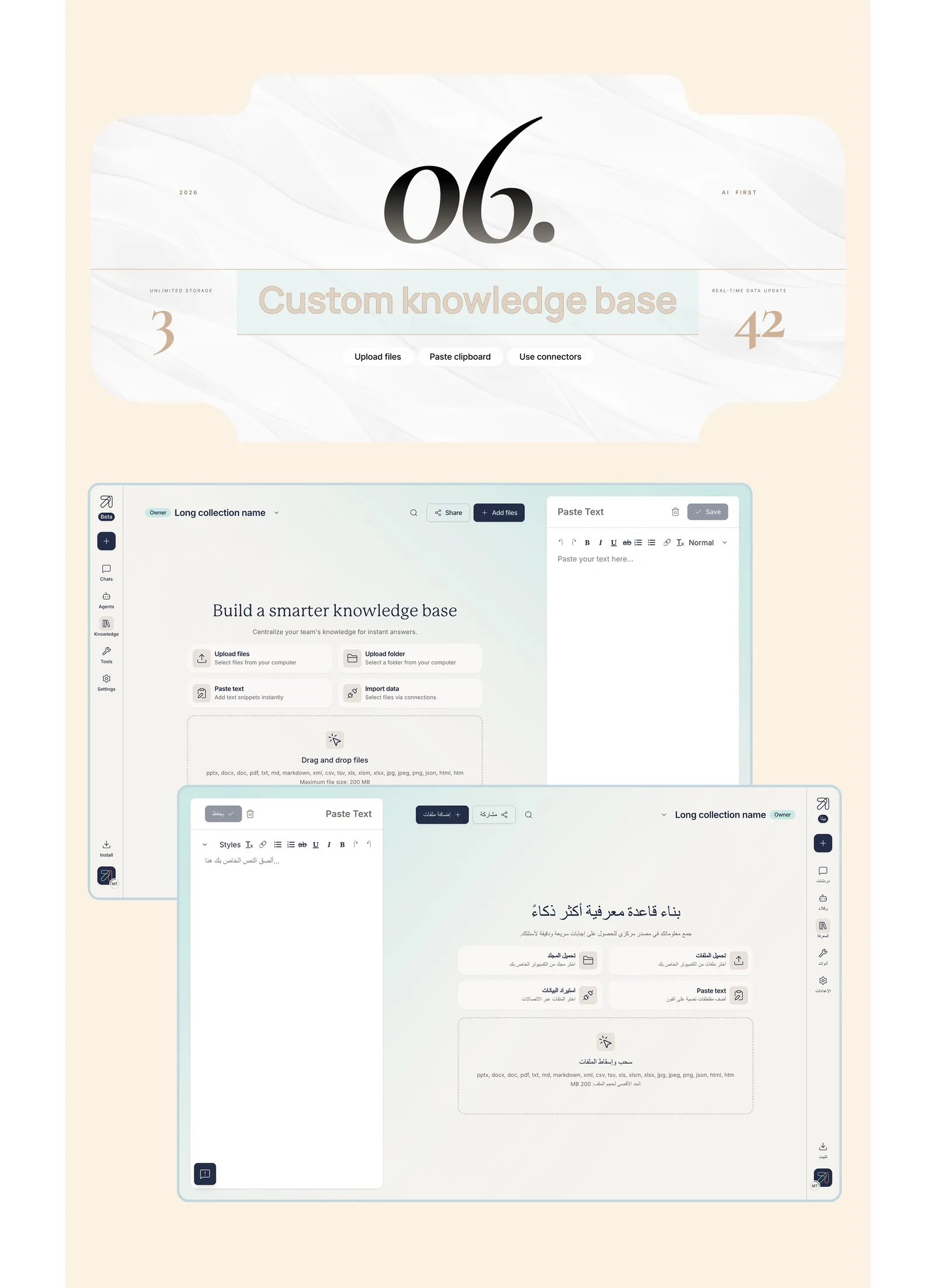
- Find answers instantly in emails, contracts, spreadsheets and slides.
- Get talent insights and automate HR policies to onboard new hires faster.
- Forecast revenue, ensure compliance and manage financial risk.
- Review contracts, align policies and stay ahead of regulations.
- Uncover lead insights and generate high-performing sales content.