Mobile applications for Moscow City Government
3 awardsin 2016
I was a part of the team that created the app «Government Services of Russia» for iOS, Windows Phone and Android, and led design for «Services of Moscow» as Principal Senior Designer and Art Director in 2014–2015.
Government Services of Russia
I recreated the app from the old style to the new one (the desktop site was made by AIC). My role was not to design a certain set of screens: it was more than 170 cases over a few months, so we created components and made up the cases in code.

Problem: How might we increase engagement with government services? That’s exactly the kind of request a client came to me with. The client was dissatisfied with the current citizen’s mobile experience with government services. No surprise there. A light peer review immediately let me know how bad it was. Moreover, I myself have fallen victim to bad UX in government services many times. Who better to solve this problem than me?
Prior to the research, we studied all the provided data and feedback, and drew attention to a critical point: the shortcomings of the mobile app. This was our first and main hypothesis:
- Lack of growth due to the complexity of receiving services and their small number;
- Unexplored potential for developing traffic from mobile devices.
In order to obtain qualitative data, we requested 10 users from each segment. In the first iteration, government representatives recruited respondents on their own. From the “Used and extremely dissatisfied” segment we were provided with 12 people. In the course of communicating with the users, we found out that only one customer from the segment met technical errors. We requested another 30 contacts from this segment and recruited them ourselves. Only 2 of them also had technical errors or obsolete devices. So, the main problem is UX. I calculated some basic metrics:
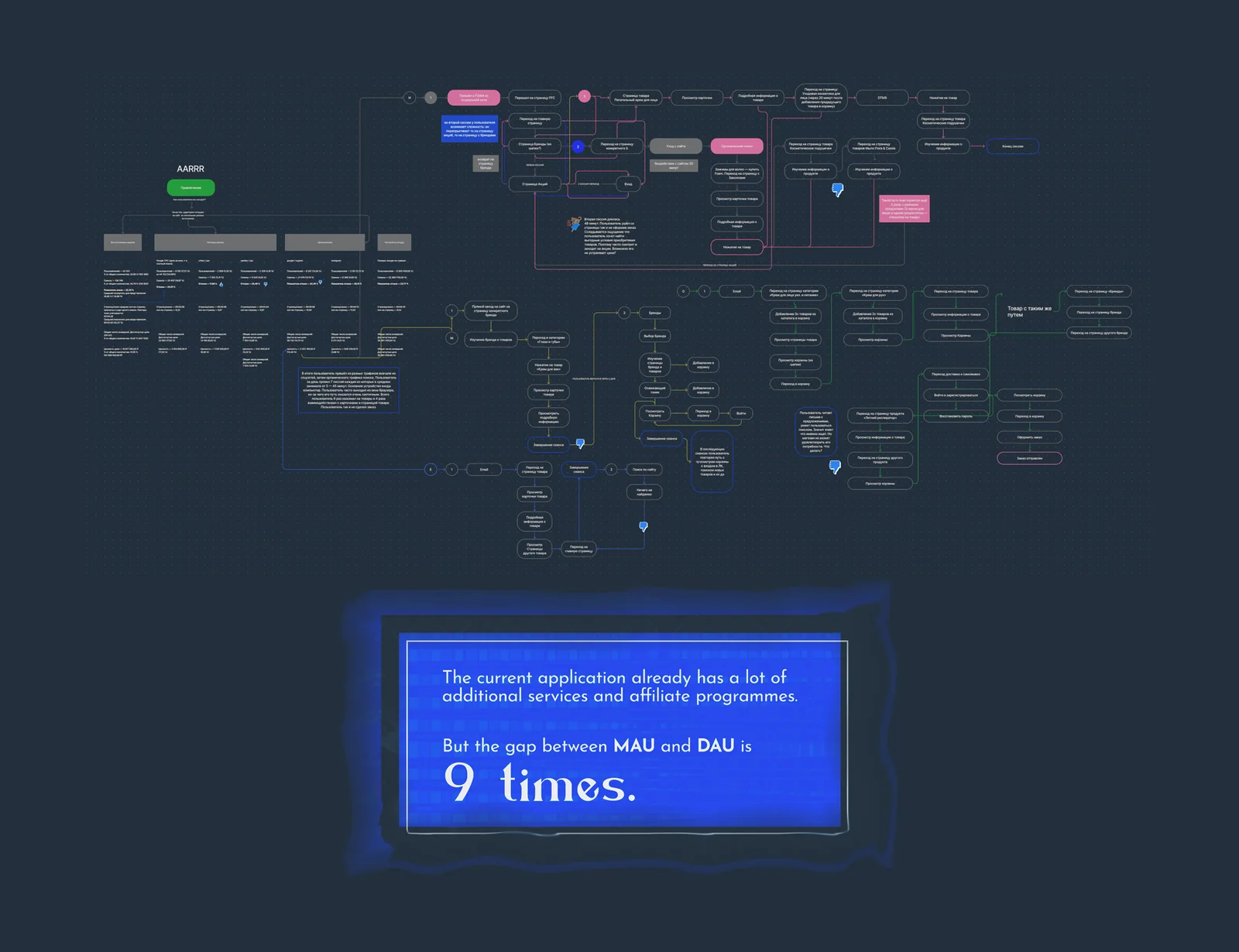
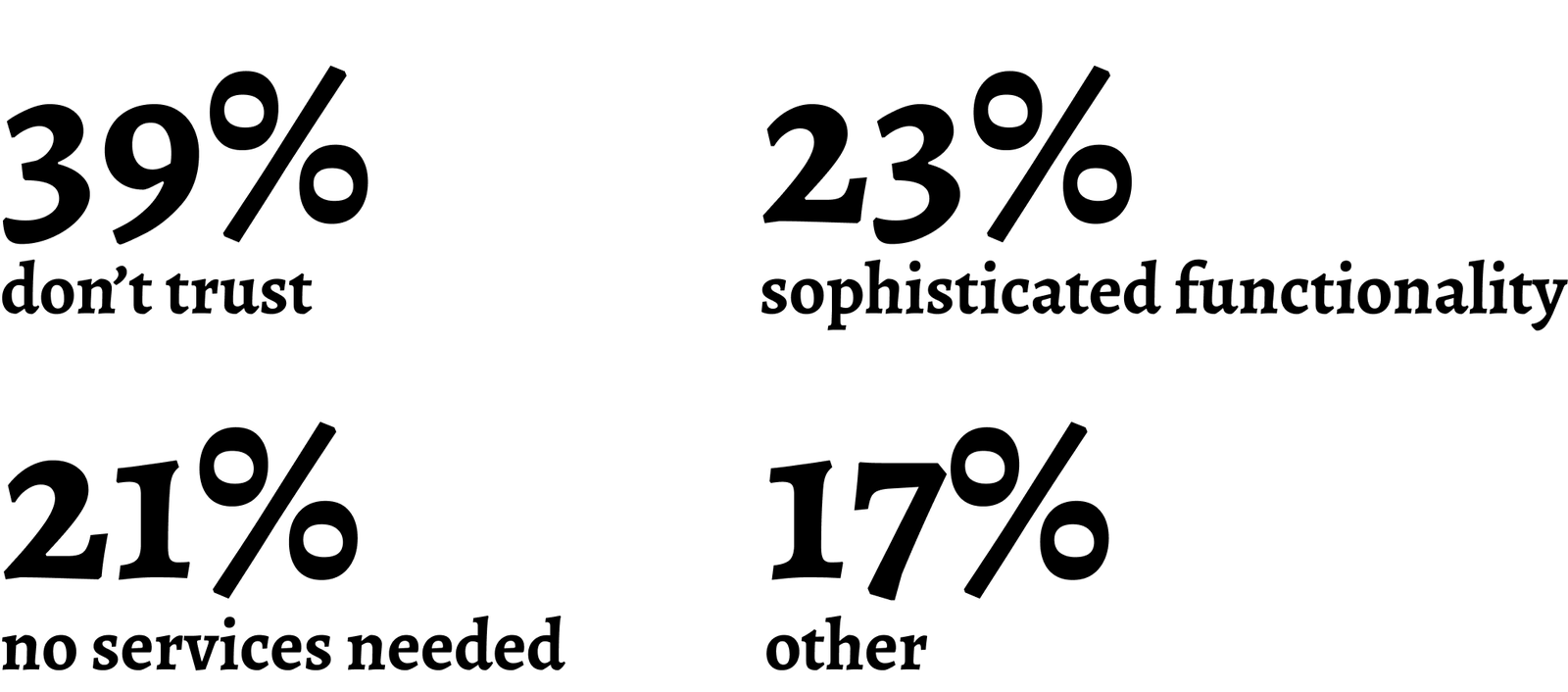
Improving these metrics is our goal. I started by finding out why people stop using services before getting the result, despite the aggressive and expensive advertising of services. I’ve used a lot of surveys at the federal level. We decided to use our expertise and conducted a UX audit. During the business survey, we repeatedly noted problems with the speed of interaction and poor interface solutions. Result:
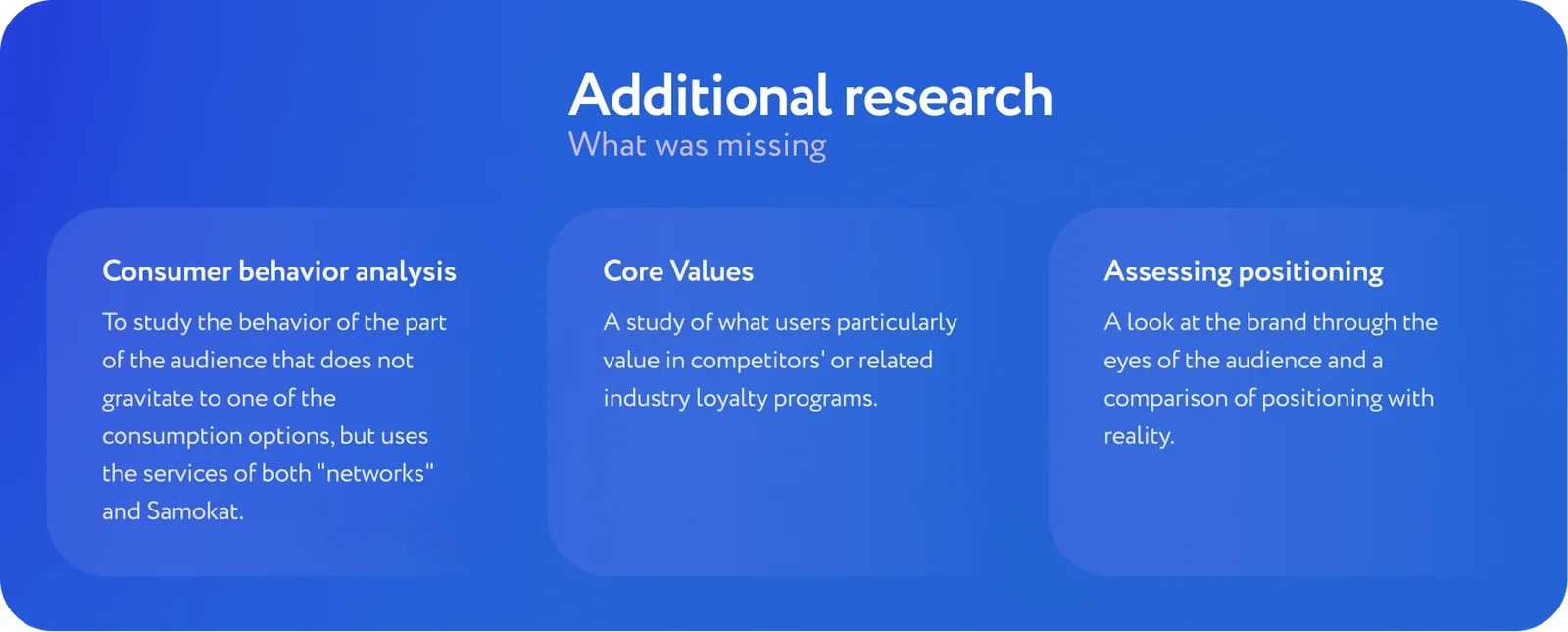
So, the actual status was quite sad, and we started Interviews and Prioritization Plots to fill up the backlog. It was crucial for delivering the MVP, because for a product with a PAM (Potential Available Market) of 170,000,000 people and a SAM (Serviceable Available Market) of 87,000,000 it’s critical. For instance, during the user study, respondents often mentioned “Check the readiness of legalization of documents”, so we included it in the competitive analysis. It was one of our Riskiest Assumption Test (RAT) approaches. We implemented it immediately and it improved MAU.
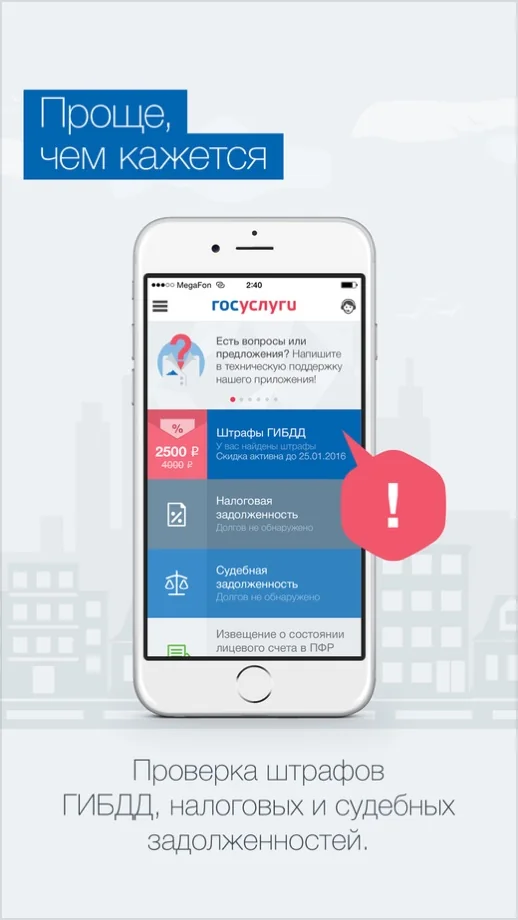
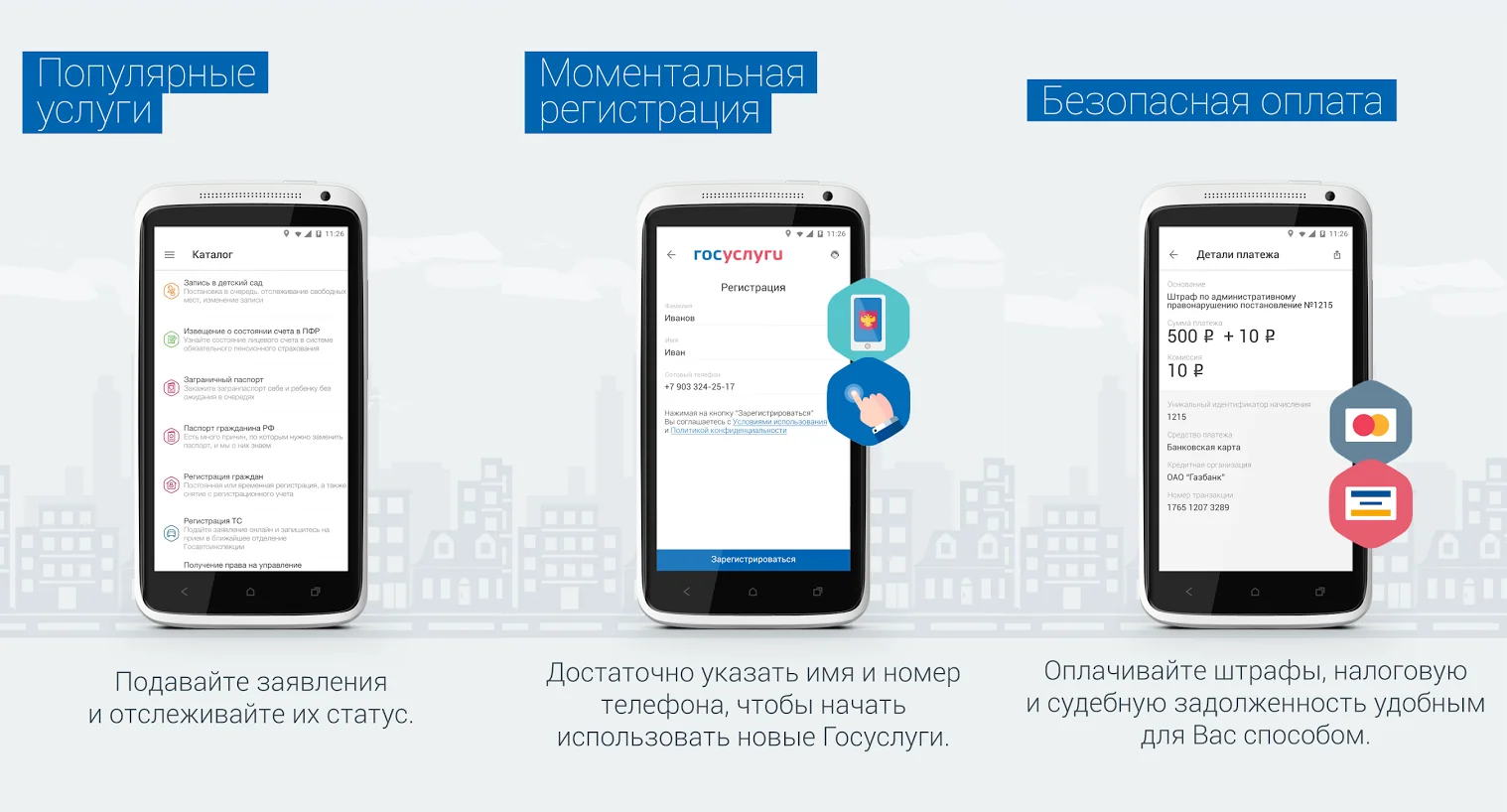
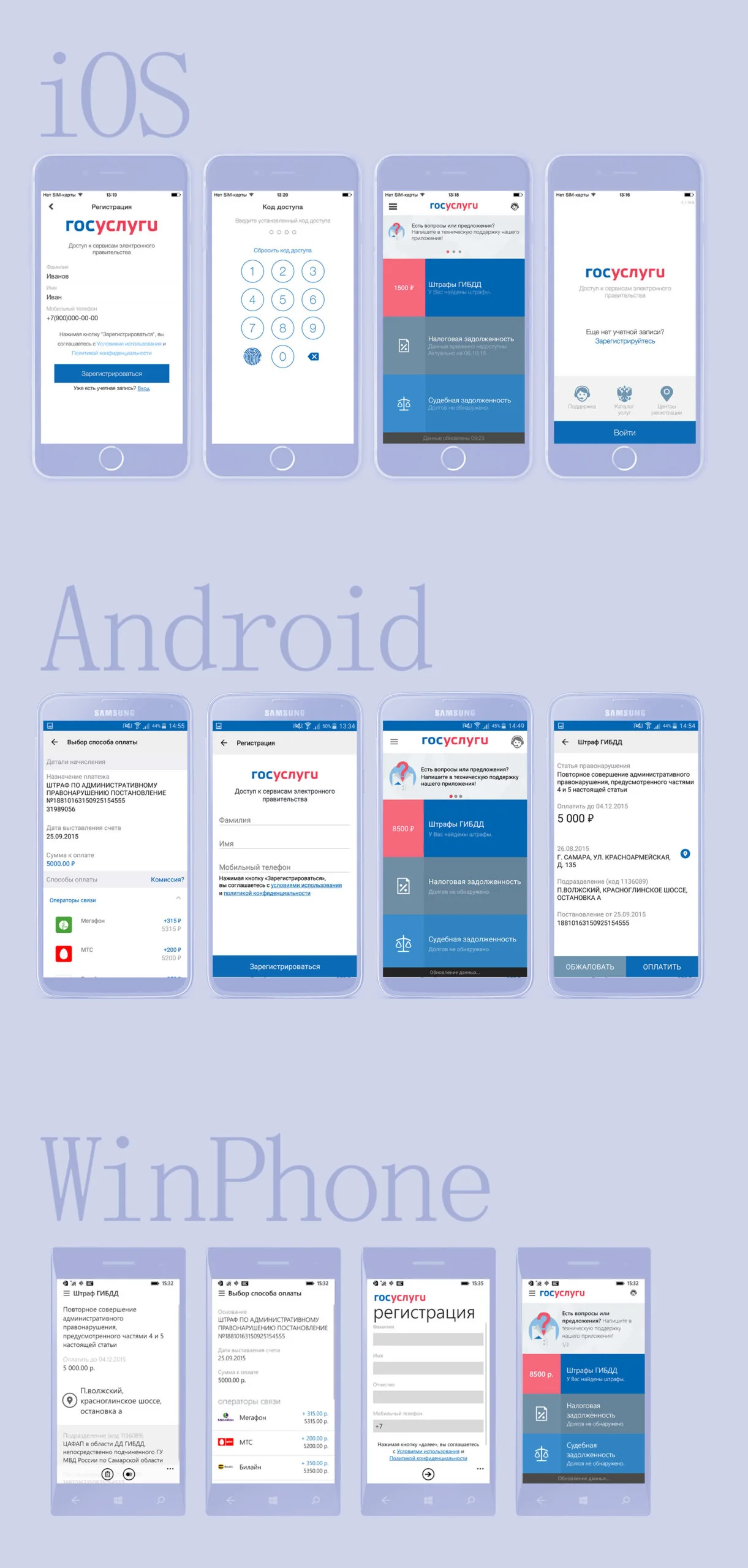
In 2016 our app (I didn’t build the product entirely on my own) won the following awards:
- Best brand app
- Productivity, services, education
- Lifestyle
Services of Moscow
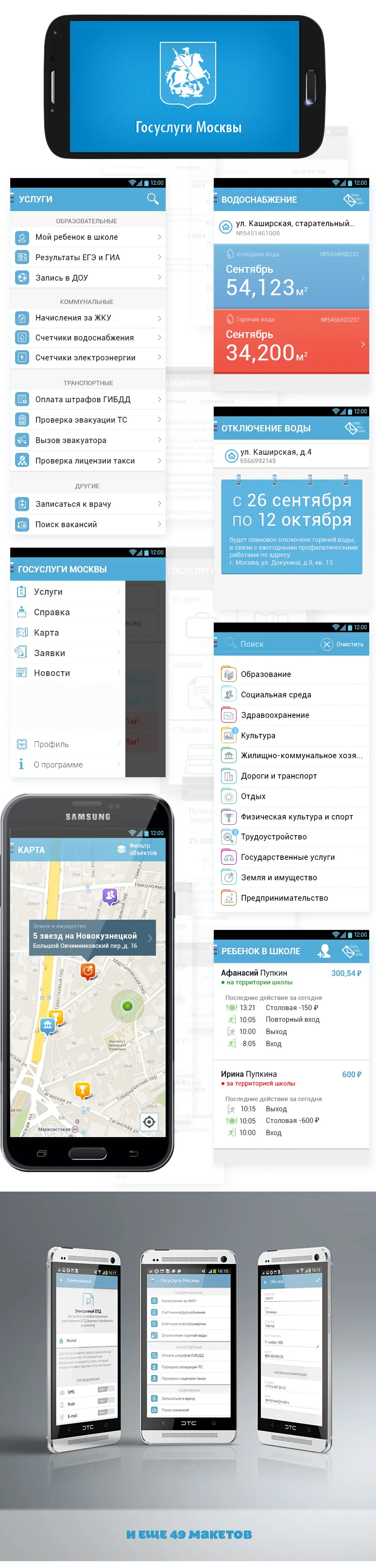
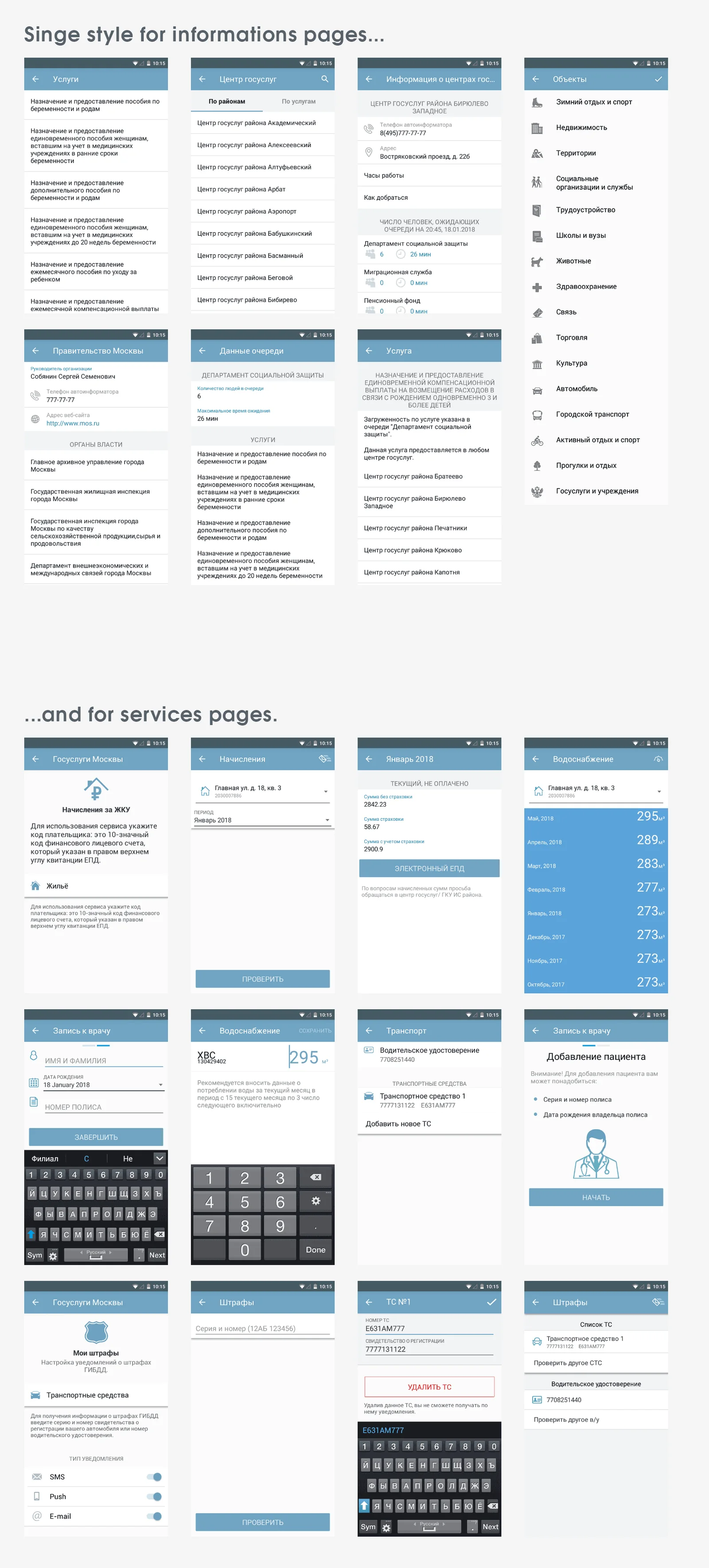
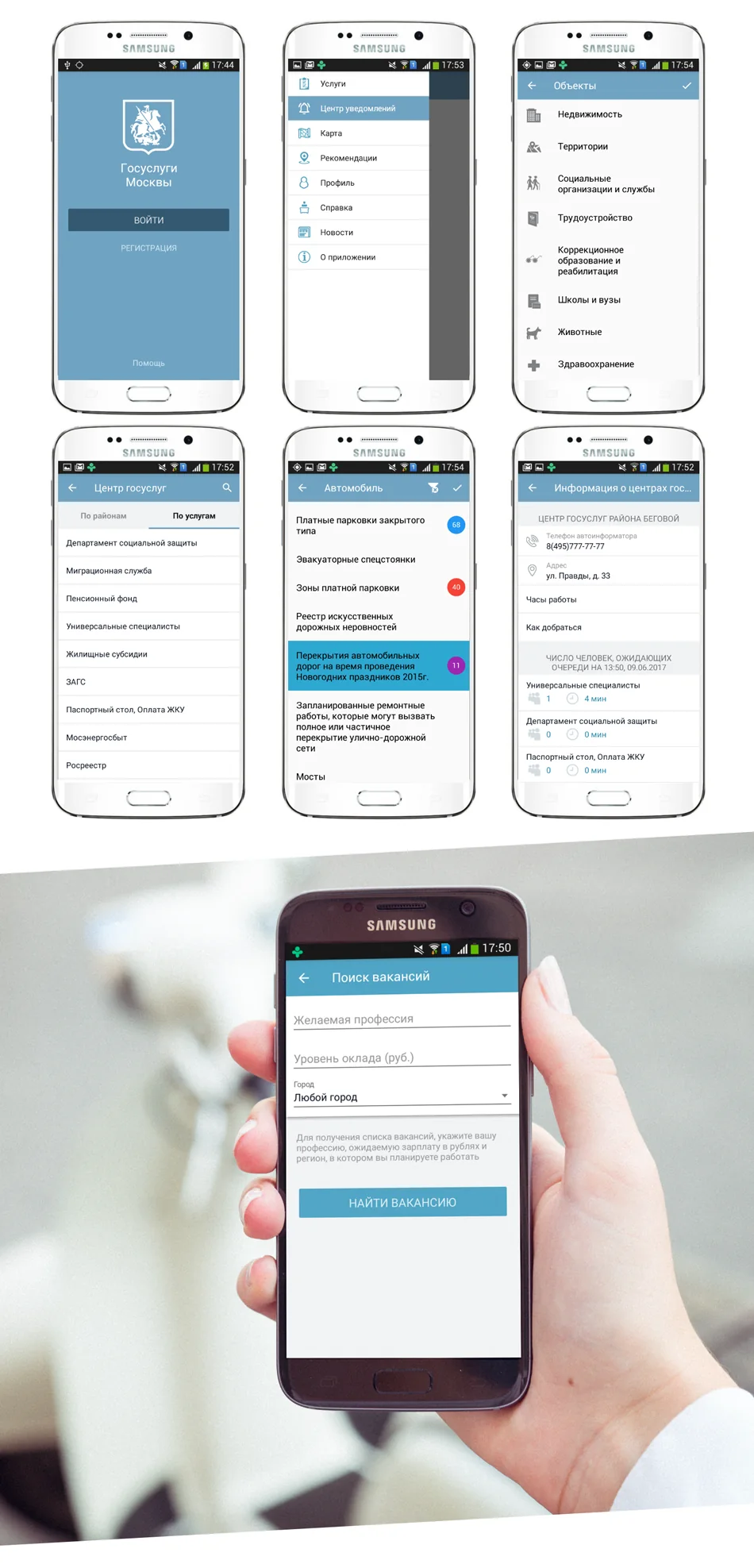
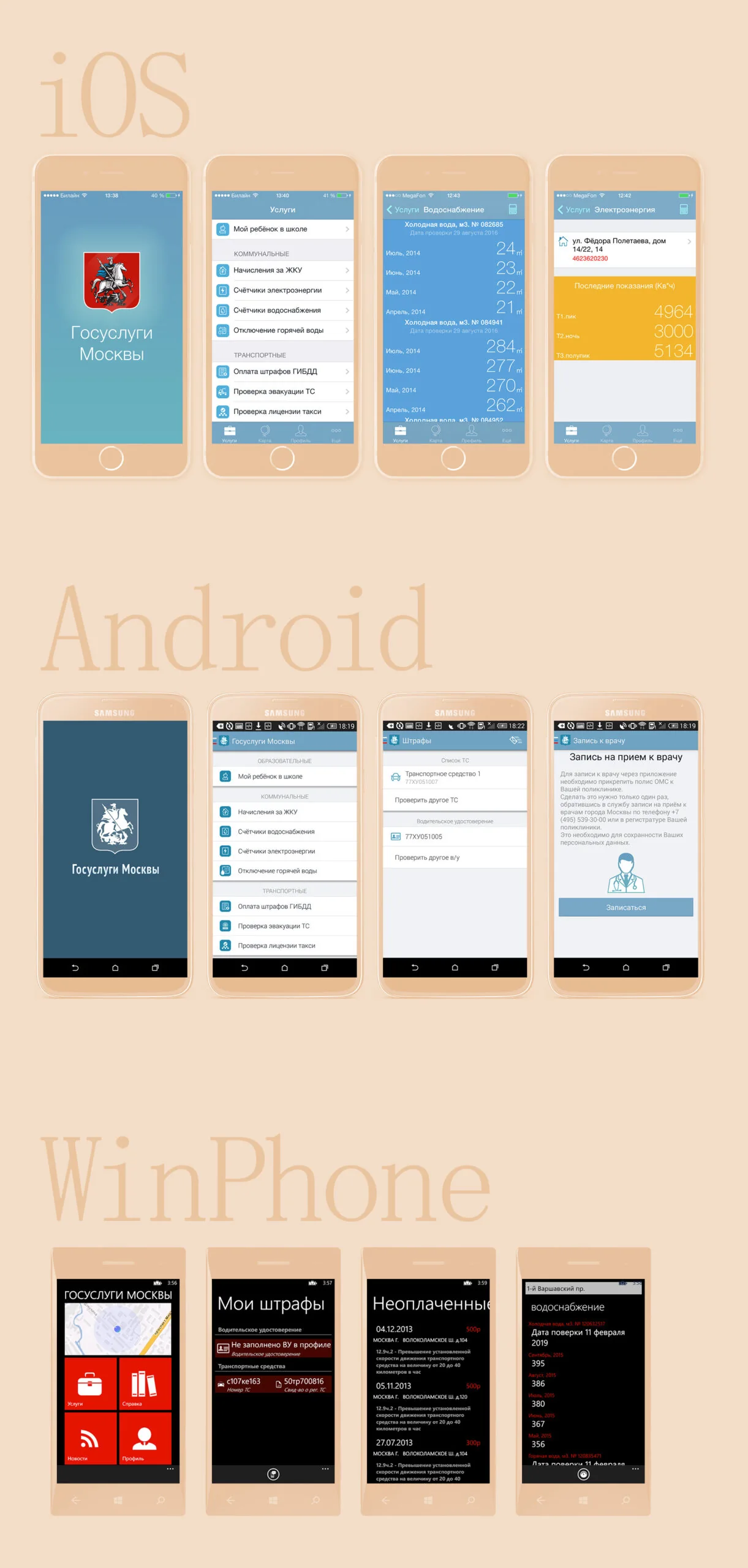
Public services in Moscow for all the most popular platforms. Usability, analysis, monitoring support after the release and implementing new features after the release. My role was Principal Senior Designer and Art Director in 2014–2015.
The city app «Public services in Moscow» lets you use the capital’s electronic services from a mobile device: subscribe to a newsletter about hot-water outages at your home, pay a traffic fine, receive an evacuation notice, schedule a doctor’s appointment, submit meter readings and keep track of all charges for utility services. The app also lets you monitor your child’s attendance and meals at school, get notified about operations with the student’s card, and much more.
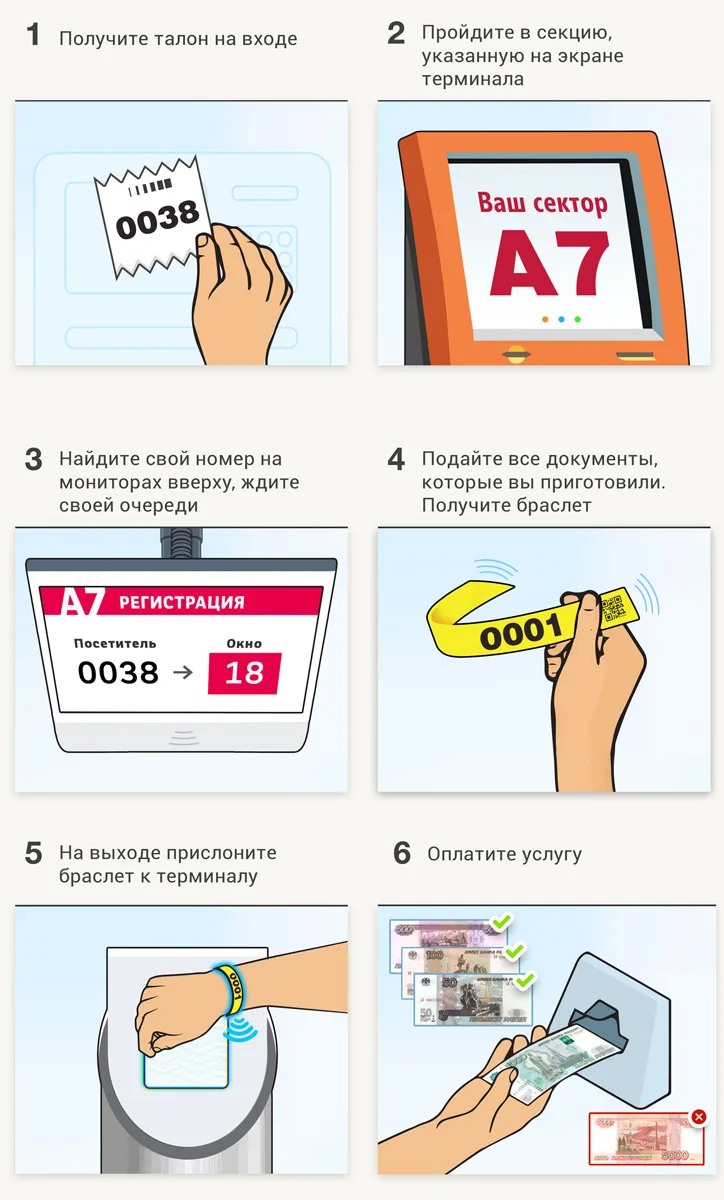
A tutorial for citizens who decide to get services offline:
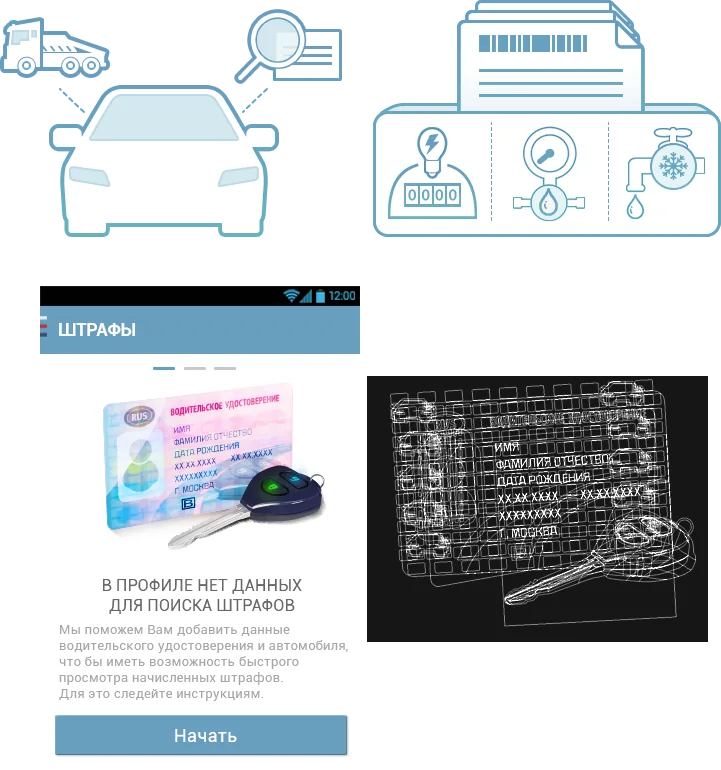
Icons and illustrations
Promotional splash screens and illustrations for public services in Moscow. Clean vector. Also used in print — you may have seen these pictures in the Moscow metro.

Around Russia
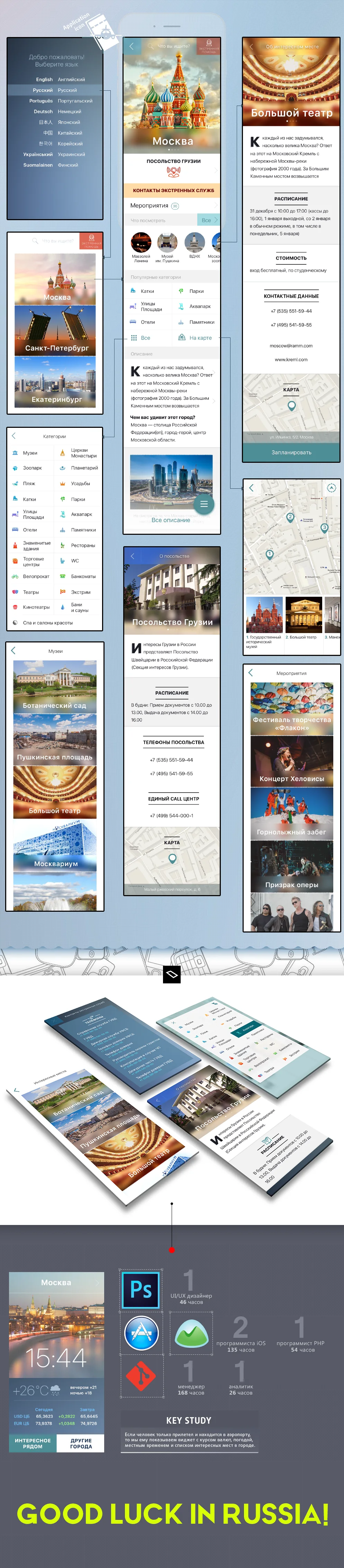
We prepared a fully interactive prototype, driven by JSON.
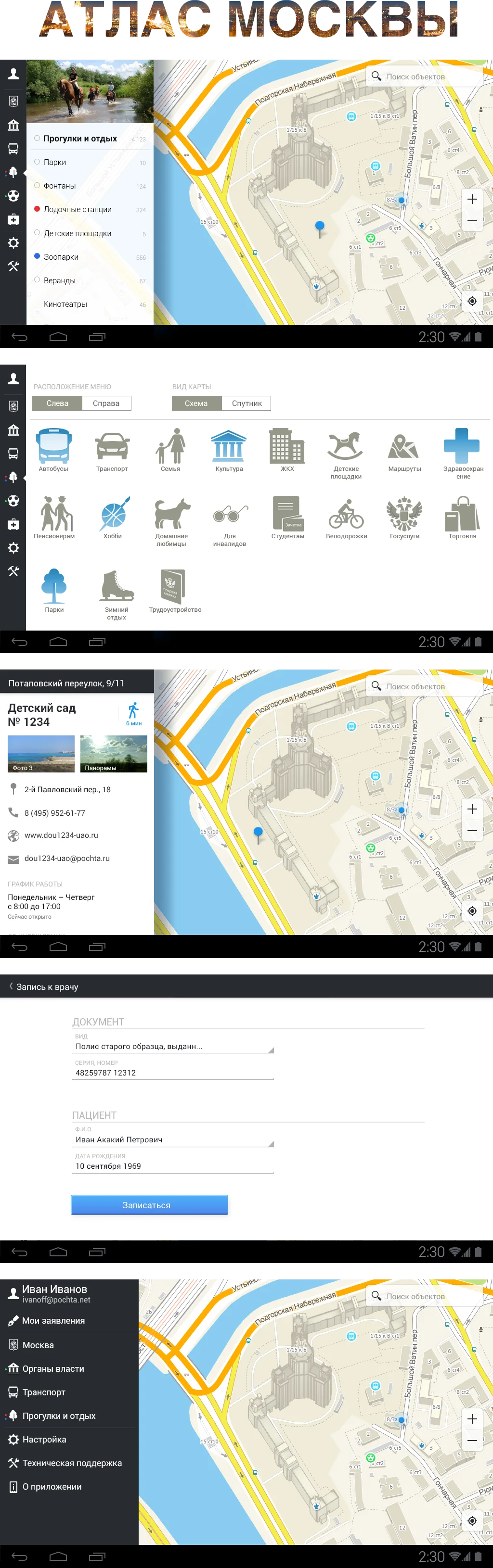
Atlas of Moscow
A mobile app for the residents of Moscow, with a map and a list of all state institutions where you can get services.